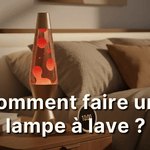
How to make a homemade lava lamp?

Lava lamps have transcended decades without ever losing their hypnotic charm. This iconic object from the 70s continues to fascinate young and old alike with its colorful bubbles that rise and fall in a soothing ballet. But did you know it's possible to make a lava lamp at home with simple ingredients? Whether you're looking for a creative activity to share with the family or want to personalize your home decor, this guide reveals all the techniques for creating your own lava lamp, from a quick and easy version to a faithful replica of the original.
Understand how a lava lamp works before you make one
Before you embark on making a lava lamp , it's essential to understand the scientific principle behind this fascinating spectacle. It's not magic, but physics applied in a fun and decorative way.
A lava lamp works thanks to three fundamental principles: the difference in density between two immiscible liquids, the effect of heat on these liquids, and the phenomenon of convection. In a typical commercial lava lamp , colored wax or paraffin floats in a clear liquid, all heated by a bulb at the base. As the wax heats up, it expands, becoming less dense than the surrounding liquid and rising to the top of the container. Upon cooling at the top, it becomes denser again and falls back down, creating this characteristic perpetual motion.

Temperature plays a crucial role in this process. A lava lamp must reach a precise temperature to function correctly: too cold, and the wax remains stationary at the bottom; too hot, and it rises too quickly or sticks to the top. It is this delicate balance that makes creating a homemade lava lamp both exciting and tricky.
What exactly is the liquid in lava lamps?
The exact composition of commercial lava lamps is often kept secret by manufacturers, but the general outline is known. The clear liquid is usually a mixture of distilled water and a chemical agent that adjusts the density, often propylene glycol or isopropyl alcohol. This liquid is precisely calibrated to have a density slightly higher than that of wax at room temperature.
The "lava" itself is made of paraffin wax or a blend of special waxes, mixed with colorants and sometimes other additives to achieve the desired texture and consistency. Some manufacturers also add carbon tetrachloride or other solvents, but these substances are difficult to obtain and potentially dangerous for home use.
For a homemade lava lamp , you'll need to find accessible and safe alternatives that replicate these properties without risk to your health. This is where ingenuity and experimentation come into play, with different methods adapted to your goals and level of expertise.
How to make a temporary lava lamp: the quick and easy method
If you'd like to create a temporary lava lamp for a family activity or simply try out the concept, there's a super-simple method that requires only a few kitchen ingredients. This version doesn't exactly replicate the continuous movement of a real lava lamp, but it offers an equally captivating display for about fifteen minutes.
To make this quick lava lamp, you will need a clear plastic or glass bottle, water, vegetable oil, food coloring, and effervescent tablets (such as effervescent aspirin or denture cleaning tablets). The principle is simple: oil and water don't mix, and the gas bubbles produced by the effervescent tablets will cause droplets of colored water to rise through the oil, creating a visual effect similar to that of a lava lamp.
Start by filling your container three-quarters full with vegetable oil. Then add water until the container is almost full, leaving a few centimeters of headspace. You'll notice that the denser water naturally settles at the bottom beneath the layer of oil. Add a few drops of food coloring: it will pass through the oil and color only the water at the bottom. To begin the show, break an effervescent tablet into pieces and drop them into the container. The carbon dioxide bubbles will immediately begin to carry droplets of colored water upwards, creating a fascinating display.
Can you make a lava lamp with baking soda?
Absolutely! Baking soda offers a great alternative to effervescent tablets, and you probably already have this ingredient in your kitchen. This method works on the same principle of creating gas bubbles, but uses the chemical reaction between baking soda and an acid, usually white vinegar.
To create your own baking soda lava lamp, follow the same initial preparation: vegetable oil and colored water at the bottom of the container. Instead of adding effervescent tablets, sprinkle about a teaspoon of baking soda directly into the container, then gently pour in a tablespoon of white vinegar. The acid-base reaction will immediately produce carbon dioxide, creating those characteristic bubbles that carry the colored water through the oil.
The advantage of this method is that you can restart the effect at will by simply adding more vinegar to the mixture. Each addition triggers a new series of bubbles and prolongs the show. It's also an excellent science experiment to do with children, as it visually and playfully illustrates chemical reactions and the properties of liquids.
How to make a lava lamp without baking soda or tablets?
If you're looking for a homemade lava lamp that works without needing to be constantly "recharged" with effervescent products, there's a more elaborate method that more closely resembles the way a real lava lamp works. This technique requires more time and ingredients, but offers a longer-lasting result that's closer to the original.
For this version, you will need 90% alcohol or isopropyl alcohol, distilled water, baby oil or mineral oil, oil-soluble dye (which dissolves in oil), and a controlled heat source. The principle is to create a mixture of colored oil whose density is almost identical to that of the liquid in which it will float. With the addition of heat at the base, the oil expands, becomes less dense and rises, then sinks again as it cools.
In a clear, heat-resistant glass container, mix approximately 70% distilled water with 30% alcohol. This mixture will have a density slightly lower than that of pure water. In a separate container, mix mineral oil with a few drops of oil-soluble dye to achieve the desired color. Adjust the proportions so that the colored oil has a density very close to that of your water-alcohol mixture. Carefully pour the colored oil into the liquid: it should settle to the bottom or float just below the surface, depending on your calibration. Then, place a gentle heat source under the container (such as a tea light candle at a safe distance) and watch the process begin after a few minutes of preheating.
How to make a real, permanent lava lamp: the advanced guide
If you're intrigued by the concept and want to create a truly functional lava lamp that can grace your home for years to come, prepare for a more ambitious project. This version requires specific materials and a bit of patience, but the result is well worth the effort.
For a proper permanent lava lamp, you'll need pure paraffin wax (available at craft stores), isopropyl alcohol of 91% or higher, distilled water, oil-soluble candle dye, a heat-resistant glass container with a tight-fitting lid, and a suitable lighting system. The main challenge lies in achieving the correct density balance between the wax and the carrier liquid.

Begin by melting approximately 200 grams of paraffin wax in a double boiler. Once melted, add candle dye until you achieve the desired shade. Meanwhile, prepare your carrier liquid by mixing approximately 3 parts distilled water to 1 part isopropyl alcohol in your glass container. The goal is to adjust the density of the water-alcohol mixture so that it is slightly thicker than that of the melted wax but thinner than that of the cooled wax.
What type of bulb is needed for a lava lamp and how do I install it?
Choosing the right bulb is absolutely crucial for the proper functioning of your homemade lava lamp . Contrary to what one might think, not all bulbs are suitable, and the advent of LEDs has even complicated things for lava lamp enthusiasts.
Traditional lava lamps use 25- to 40-watt incandescent bulbs, which produce enough heat to warm the wax without overheating the liquid. The problem with modern LED bulbs is that they are specifically designed to produce light without generating heat, making them unsuitable for use in a lava lamp. If you own a vintage lava lamp and want to get it working again, you will need to specifically look for residual incandescent bulbs or low-wattage halogen bulbs.
For your DIY lava lamp, several options are available. You can install a screw-in socket at the base of your container with a 25W incandescent bulb, making sure the bulb never touches the glass directly (risk of thermal cracking). A safer alternative is to use an adjustable desk lamp, placing the bulb under the container, about 5 centimeters away. This setup allows you to easily adjust the distance and therefore the temperature.
For those who absolutely want to use modern technology, some halogen LED bulbs exist and produce slightly more heat than standard LEDs, but they are generally still insufficient. One solution is to use a small, adjustable heating mat (like those used for reptiles or seedlings), which you place under the lamp with a thermostat to maintain a constant temperature of around 50-60°C at the base of the container.
Essential adjustments for a working lava lamp
Once your lamp is assembled, it's unlikely to work perfectly the first time. Making a lava lamp is an exercise in patience that often requires several gradual adjustments to achieve the ideal movement.
If your wax stubbornly remains at the bottom even after an hour of heating, it means your carrier liquid is too thick or your heat source is insufficient. Try slightly increasing the proportion of alcohol in your mixture (add one tablespoon at a time) or move your heat source closer. Conversely, if the wax rises quickly and sticks to the top without falling back down, your liquid is too thin or your lamp is too hot. In this case, add a little distilled water to the mixture or move the heat source further away.
The formation of small balls versus large bubbles also depends on several factors. Too rapid a movement will produce many small bubbles, while gentler heating will encourage the formation of large, majestic bubbles. The amount of wax also plays a role: too much wax will create a clump at the top, while too little will give a sparse, unimpressive effect. Aim for approximately 15 to 20% of the total container volume in wax for optimal results.
Remember that a lava lamp needs time to heat up. It generally takes between 2 and 4 hours for the movement to become regular and smooth. This initial patience is rewarded with hours of mesmerizing display once the temperature reaches equilibrium.
The unexpected benefits of a lava lamp in your home
Beyond the nostalgic aspect and the creative activity, having a lava lamp in your home offers concrete advantages for your well-being and your decoration.
The slow, hypnotic movement of the colored bubbles has a scientifically recognized calming effect. Watching a lava lamp for a few minutes can reduce stress and promote relaxation, much like gazing at the flames in a fireplace or the ocean waves. This type of gentle visual stimulation activates our parasympathetic nervous system, responsible for relaxation and recovery. In a bedroom, a lava lamp can thus become a bedtime ritual, particularly appreciated by anxious children or those who have trouble falling asleep.

From a decorative standpoint, the lava lamp adds a retro-chic touch that fits perfectly into both a boldly vintage interior and a contemporary decor seeking originality. Its soft, colored light creates unique atmospheres, transforming a reading nook into a cozy cocoon or a playroom into a fun and stimulating space. Unlike functional lighting, it invites contemplation and slowing down, precious qualities in our often too-fast-paced lives.
Making a homemade lava lamp also offers an excellent learning opportunity for children and teenagers. It concretely illustrates concepts of physics and chemistry while developing patience, the scientific method (hypothesis, testing, adjustment), and the satisfaction of creating something with their own hands. A family project that combines science, creativity, and decoration—now that's a rare and enriching combination.
Maintenance and precautions for your DIY lava lamp
Now that you have created your homemade lava lamp , a few maintenance and safety rules are necessary to enjoy it for a long time and without risk.
Never leave your lava lamp unattended, especially the first few times. The combination of heat, electricity, and flammable liquids (alcohol) requires constant supervision. Never operate your lamp for more than 8 consecutive hours: overheating could damage the components, cause the liquid to evaporate, or even crack the glass container. If the glass becomes too hot to touch, turn off the lamp immediately and allow it to cool completely.
Evaporation is inevitable over time, especially if your container isn't perfectly airtight. You'll notice the liquid level gradually dropping and the performance becoming less optimal. Simply top it up with a water-alcohol mixture in the same proportions as the original. Take this opportunity to also clean the container: dust and residue can accumulate on the inside walls and detract from the visual effect.
If you notice your wax is crumbling into too small a particle or losing its ability to bubble, it's probably time to change the carrier fluid. Over time, alcohol evaporates faster than water, altering the mixture's density. A complete fluid change every 6 to 12 months will keep your lamp in perfect working order.
When to opt for a professional lamp rather than a DIY solution
While making a lava lamp is a rewarding and fun experience, it must be acknowledged that commercial models offer some undeniable advantages. Commercial lava lamps are designed with optimized materials and formulas after decades of research and development.
They operate reliably from the first use, without requiring constant adjustments. Their heating system is precisely calibrated for the quantity and type of wax used. They are also safer in the long run, with thermal shock-resistant borosilicate glass containers and certified electrical circuits. If you're looking for a durable decorative item for your living room or bedroom, investing in a professional wax warmer might be a wiser choice.
Making a homemade lava lamp is still a perfect educational project, family activity, or way to test your interest in this type of object before investing in a professional model. It also allows for complete customization: colors, size, shape of the container—everything is possible, depending on your imagination and your decor.
For those who are really keen, we invite you to consult our guide on how to make a bedside lamp . And if you'd like to complete your decor with stylish and functional lighting that will complement your lava lamp, explore our collection of modern bedside lamps, carefully selected to transform your bedroom into a true haven of comfort.
Conclusion: Create your own lava lamp and illuminate your creativity
Making a homemade lava lamp is much more than a simple DIY project: it's an adventure that blends science, creativity, and decoration. Whether you opt for the temporary version using oil and effervescent tablets for an activity with your children, or embark on creating a truly permanent lava lamp with wax and a heating system, each approach offers its own unique rewards and lessons.
You now have all the tools you need to understand how these fascinating objects work, choose the method best suited to your needs and skill level, and create your own personalized lamp. Remember that patience and experimentation are your best allies: gradual adjustments are an integral part of the process and contribute to the satisfaction of final success.
At Lampera , we celebrate all forms of lighting that transform a house into a warm and inviting home. Whether your lava lamp is homemade or professionally made, the most important thing is that it brings that unique touch that reflects your personality. Explore our collections to discover how lighting can revolutionize your interior design and create those moments of tranquility we all crave. Your next luminous favorite might already be waiting for you in our shop!